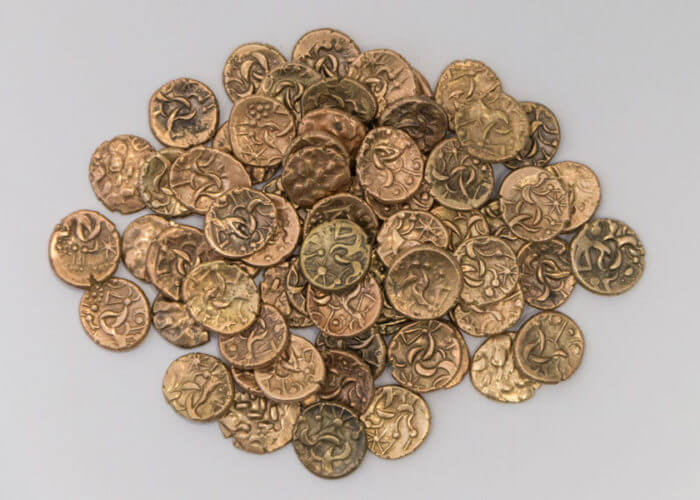
The Egyptian Museum, Cairo opened a new temporary exhibit entitled: Coins through the Ages on August 10. Over the past eight years the Egyptian Museum has hosted a series of temporary exhibitions, the most recent of which focused on five artifacts which were repatriated to Egypt. The temporary exhibition space (Hall 44) has also hosted a series of exhibits on excavations under the direction of foreign teams. This includes teams from America, France, Poland and the Netherlands. This exhibition was curated by Sayed Hassan, who did an excellent job and will be working with the new Egyptian Museum in Rome. I’m including here the text from the brochure that will be handed out during the exhibit.
Before the invention of money, people bartered their surplus crops and cattle amongst themselves to obtain necessary commodities. The first people to invent a coinage-system were the Lydians of Asia Minor in the second half of the 7th century B.C.
During the pharaonic period, gold, silver and bronze rings and large bronze ingots were sometimes used in the barter system. When the Persians first came to Egypt (525 B.C.) they brought their coins with them. The Egyptians treated these coins as ingots, valuing them based on their weight in metal and sometimes melting the coins for other uses.